Thoughts on Architecutre

Just a collection of my thoughts or links to other thoughts on architecture and design.

Thursday, June 11, 2009

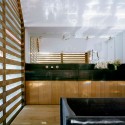
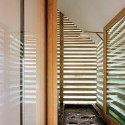
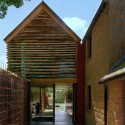
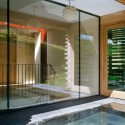
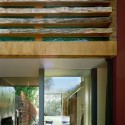
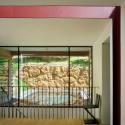
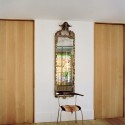
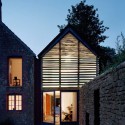
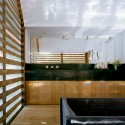
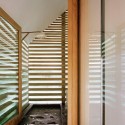
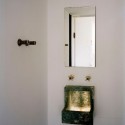
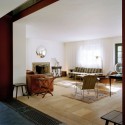
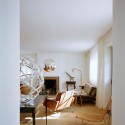
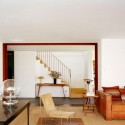
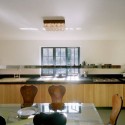
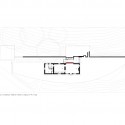
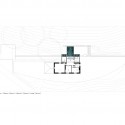
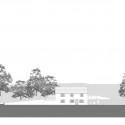
The “Front and back” Apartment / h2o architectes

The “Front and back” Apartment / h2o architectes

Posted using ShareThis

Wednesday, June 10, 2009

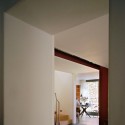
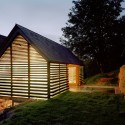
Vila Isabella / Brasil Arquitetura

Vila Isabella / Brasil Arquitetura

Posted using ShareThis

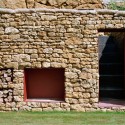
Willoughby 7917 / Lorcan O’Herlihy Architects

Willoughby 7917 / Lorcan O’Herlihy Architects

Posted using ShareThis

Sunday, May 10, 2009

Winning Entries of FormShift Vancouver Announced

FROM BUSTLER:

The winners of the first ever FormShift Vancouver have been selected. In the Vancouver Primary category, honors go to a submission from Calgary-based Sturgess Architecture. The Vancouver Secondary choice is Romses Architects (Scott Romses) – Vancouver. In the third and final category – Vancouver Wildcard – the nod goes to Go Design Collaborative (Jennifer Uegama and Pauline Thimm) of Vancouver. As first place finishers, the three contestants receive $6,000, $4,000 and $2,000 respectively.

image

Vancouver Primary Winner: Sturgess Architecture, Calgary: "Future buildings must produce rather than consume. All buildings located on primary sites should offer the city more than just density. In order to develop buildings that are ecologically friendly and sustainable, we must RE-THINK the traditional building components. THINK of the building as a variety of productive SURFACES."

image

Vancouver Secondary Winner: Romses Architects (Scott Romses), Vancouver: "Harvest Green challenges the status quo of how energy and food is produced and delivered in our city, neighbourhoods, and individual single-family homes. Mobile nomadic prefab laneway homes ('ModPods') are proposed to provide adaptable affordable housing for the city that will also offer sustainable energy and urban farming infrastructure for the immediate home as well as the city at large."

image

Vancouver Wildcard Winner: Go Design Collaborative, Vancouver: "At Vancouver's waterfront 'gateways', transportation, services, industry and homes collide. To protect industrial and agricultural land from condo development, DENcity : INTENcity proposes an energy-efficient large-span, "stacked" structure that permits endless reconfiguration and occupation. It would stand in Marpole as a beacon of Vancouver's commitment to bold innovation."

Final selections were made by a jury comprised of Canadian Architect editor Ian Chodikoff, world-renowned artist Stan Douglas, leading Vancouver architect Walter Francl, planning expert Nancy Knight, and City of Vancouver Director of Planning Brent Toderian.

"Overall the submissions were excellent," says Toderian. "The true value, I think, isn't just in the winners, but really in the totality of submissions. We received examples of good practice, best practice, and innovative new practice, all of which are useful at this key moment of opportunity for change."

In choosing the best of each category, jury members were also impressed with the attention given to community and social factors. Says Knight of the Vancouver Primary winner: "It is a thoughtful, refined, smart project, with beautiful porosity softening the density, and creative thinking about roofs, walls, floors and passageways. It also makes a great push of green building as a solution that includes social aspects such as usable space within and relationship with the adjacent neighborhood."

In addition to the three first-place finishers, the jury identified eight submissions worthy of honorable mention:

Vancouver Primary: Garon Sebastien & Chris Foyd – Vancouver; Romses Architects – Vancouver
Vancouver Secondary: Acme Architecture – Santa Barbara, California; CMO (Miller / Miller / Cavens) – Vancouver
Vancouver Wildcard: GBL Architects Inc. – Vancouver; Public Architecture + Communication – Vancouver; Idette de Boer & Magali Bailey – Vancouver; Wang Yiming – Burnaby

image

Vancouver Primary Honorable Mention: Garon Sebastien and Chris Foyd, Vancouver

The unique competition, co-hosted by the Architectural Institute of British Columbia and the City of Vancouver, challenged architects, designers and others with creative flair to submit innovative, built form ideas that will guide Vancouver's future growth. Competitors were encouraged to draw inspiration from several key initiatives developed by the city, including the Climate Change Action Plan, the EcoDensity Charter, and the Greenest City Action Team.

image

Vancouver Primary Honorable Mention: Romses Architects, Vancouver

Says Dorothy Barkley, executive director of the AIBC: "The value of a competition such as this is the opportunity it provides for new and emerging architects and firms, students and intern architects with fresh approaches and innovative ideas, to gain expression and recognition. It raises the profile of the profession, expands understanding and appreciation of the contribution that architects and architecture make to the shaping and texture of our communities."

image

Vancouver Secondary Honorable Mention: Acme Architecture, Santa Barbara, CA

The contest attracted 73 entrants and 84 submissions, including some from as far away as San Francisco, New York, Paris and Rotterdam. Identifying the best of the bunch was no easy task. "Considering that the competition welcomed entries from architects and non-designers alike, the overall quality of the submissions was very impressive,:" says Chodikoff. "While some lacked a methodological rigour, the intent was certainly there."

image

Vancouver Secondary Honorable Mention: CMO (Miller/Miller/Cavens), Vancouver

Jurors were impressed with the integration of wide-ranging ideas for sustainable development, including many that incorporated components of renewable energy on a community level, Vancouver's back lane conditions, urban agriculture, land parcellization and tenure, and various designs for green roof technologies. Many submissions also strongly addressed affordability and livability in the design. The winning submissions thoughtfully put forth multiple innovations and approaches.

image

Vancouver Wildcard Honorable Mention: GBL Architects Inc., Vancouver

Adds Chodikoff: "Vancouver has a unique opportunity of becoming a city that engenders environmental stewardship on a community level that might include neighbourhood food markets, waste-water harvesting and local energy production. These are themes that were reflected in the majority of the submissions."

image

Vancouver Wildcard Honorable Mention: Public Architecture and Communication, Vancouver

"Having a dialogue between the city and the architectural profession in B.C. is essential for the success of Vancouver," summarizes Chodikoff. "I applaud the efforts of both the City of Vancouver and the Architectural Institute of British Columbia , and I congratulate every participant who took the time to submit an entry in this competition."

image

Vancouver Wildcard Honorable Mention: Idette de Boer & Magali Bailey, Vancouver

The best and most innovative submissions will be featured as part of a series of public exhibitions and community dialogues, and used a a starting point for decisions about Vancouver's future growth.

"These design ideas can influence everything the city is doing, from review of policies to specific ideas like our laneway housing work," offers Toderian. "That is the power of this moment and why the competition was well-timed. Our need for boldness around climate change, and the challenges our new economy present, make this is the perfect time for new ideas to be explored.

image

Vancouver Wildcard Honorable Mention: Wang Yiming, Burnaby

In addition to the AIBC and the City of Vancouver, the competition received generous sponsorship support from Parklane Homes, Wall Financial Corporation, Grosvenor, PCI Group, thetyee.ca, and mcfarlane /green/biggar Architecture+ Design.


View article...


Thursday, April 23, 2009

Khyber Ridge / Studio NminusOne

Khyber Ridge / Studio NminusOne

Posted using ShareThis

Monday, March 23, 2009

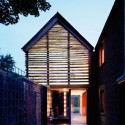
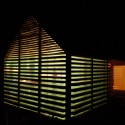
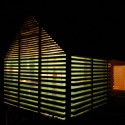
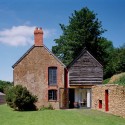
The Dairy House / Skene Catling de la Peña

From ArchDaily:

Architect: Skene Catling de la Peña
Location: Hadspen Estate, Somerset, England
Landscape: Niall Hobhouse
Lighting: Claire Spellman
General Contractor: Paul Longpré Furniture, Charles Clark
Client: Niall Hobhouse
Engineer: Anthony Ward Partnership
Project Year: US $668,000
Constructed Area: 253 sqm
Photographs: James Morris

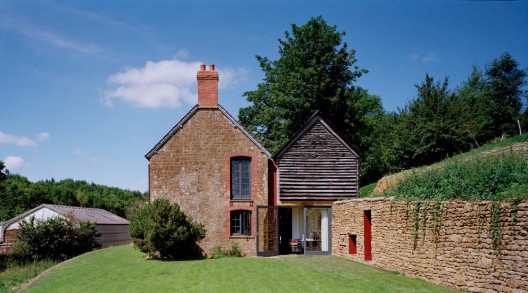
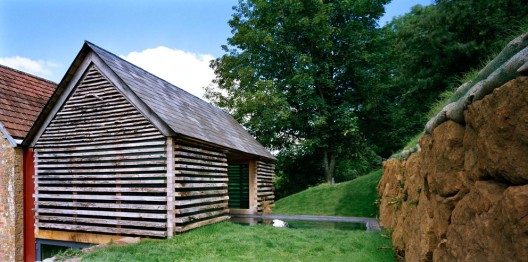
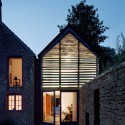
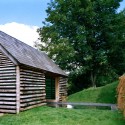
The conversion of a former Dairy to a five-bedroom house with a small pool. The project sits in an 850 acre Estate in Somerset. Pragmatically the space was to be re-planned; lean-to sheds removed and an extension added to create a total of four to five bedrooms, three bathrooms, more generous circulation space with rooms of better proportions. The brief changed during the design; what was originally to be a letting property became a retreat for the Client; a place to escape the main Estate. It was to be discreet with the intervention to appear as a natural extension of the existing structure. The design set out to appear 'un-designed'.

The design was to combine privacy and seclusion with openness to the wider landscape. The inspiration was both literal, in the stacked timber in the yard opposite, and literary, in the 18th century 'La Petite Maison - An Architectural Seduction', architectural treatise and erotic novella by Jean-Francois de Bastide.

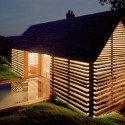
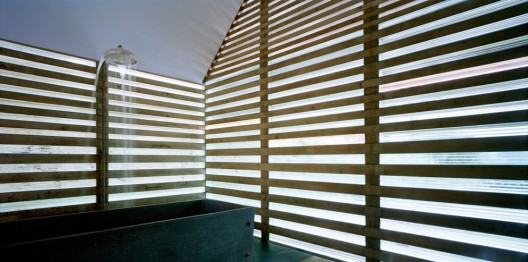
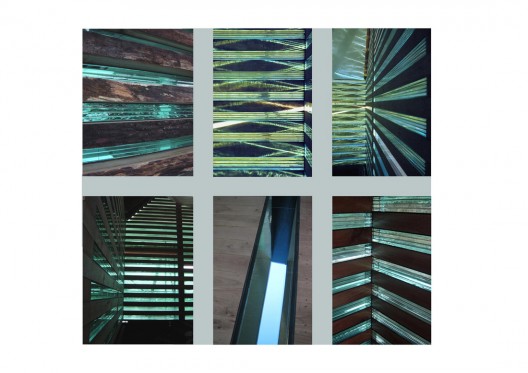
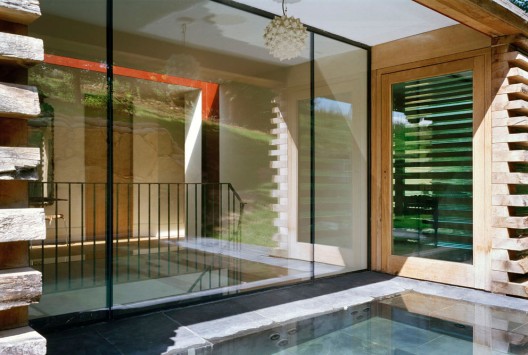
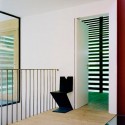
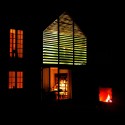
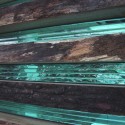
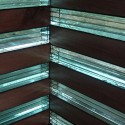
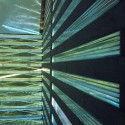
The extension houses two bathrooms; everything behind the retaining wall can be flooded with water. Layered oak and laminated float glass produce an eerie, filtered light. The dematerialising effect of refraction and reflection create an aquatic underworld. The way the light moves around the house over the course of the day draws the user through it. In the morning low light floods the east with the glass acting as a prism that projects watery green lozenges over floors and walls. By midday, the sun is overhead, streaming through the roof light slot and penetrating the two-way mirror bridge giving views from the ground floor through the building. At night this is reversed, and the flames in the fireplace are visible through the floor of the landing.

The aim was to use as many local materials as possible. Estate timber is planked and dried in the storage barns in the farmyard opposite the site, and the method of drying - where raw planks are separated by spacers to allow air circulation - became the generator of the logic and aesthetic of the extension. The glass was layered in the same manner. The pieces increase in depth towards the base to reinforce a sense of weight and rustication.

Rather than demolishing and rebuilding, the sense of 'retreat' was to be reinforced through 'camouflage'; the form and massing of the extension echoes and compliments the existing structure. The house was to appear unchanged from the outside, and to reveal itself on entering - against expectations. The entrance sequence was to discourage casual callers. The most private spaces became the most generous and luxurious; this was to be a building that privileges solitude.

The Construction Process:

The gable end walls were conceived of as rigid beams which span between the large steels fixed to the existing building and the bank opposite. The construction alternates interlocking layers of oak and laminated glass blocks. The extension was constructed by a local cabinet maker - Paul Longpré - used to millimetre tolerances and very fine finishes. The timber was cut and finished in his workshop two miles from the site, and the glass blocks laminated by a specialist glass worker nearby.

The oak retains the waney edge on the outside; the inside is finely sanded. Similarly, the blocks of laminated glass are left rough on the exterior, and are polished on the interior. The glass draws light through the walls to create the effect of lightweight construction internally, while the exterior appears as much heavier, rougher and rustic. The structure was built up of the prefabricated pieces on site. The glass blocks sit on rubber gaskets which in turn sit directly on the timber. A foam seal sits on the surface of the blocks to form a weatherproof movement joint, clear silicon forms a final weather seal. Pilkington donated the glass for the extension as this technique has not been used before.

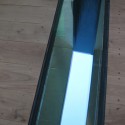
Glass has been utilized in many different forms to reinforce the conceptual 'serial unraveling' of the house. Sensually, the laminated glass blocks form a watery barrier as structure and skin, sending refracted light around the bathing spaces allowing a sense of enclosure from, and connection to, the landscape outside. Instrument Glass, who produce lenses for scientific and military use, provided four 'windows' of low iron glass blocks for selected views out. Two-way mirror emulates the water in the bathing pool as a strip through the building, allowing views through two floors depending on relative light levels/the time of the day. Used at the entrance, it reflects the landscape at the approach to the house dematerializing the staircase and base of the building and making it appear transparent. It also forms a screen for the strip of light bulbs marking the main door. A pair of antique telescopes set into the two way mirrored wall construction, allow scrutiny of visitors to the house. Self-cleaning glass forms the screen to the pool, and the roof-light glazing.


View article...


Sunday, February 15, 2009

The Therme Vals / Peter Zumthor

From Archdaily but I love this building so much.

THE THERME VALS BUILDING

Built over the only thermal springs in the Graubunden Canton in Switzerland, The Therme Vals is a hotel and spa in one which combines a complete sensory experience designed by Peter Zumthor.


ONE OF THE INDOOR POOLS

Peter Zumthor designed the spa/baths which opened in 1996 to pre date the existing hotel complex. The idea was to create a form of cave or quarry like structure. Working with the natural surroundings the bath rooms lay below a grass roof structure half buried into the hillside. The Therme Vals is built from layer upon layer of locally quarried Valser Quarzite slabs. This stone became the driving inspiration for the design, and is used with great dignity and respect.

STAIRWAY

"Mountain, stone, water – building in the stone, building with the stone, into the mountain, building out of the mountain, being inside the mountain – how can the implications and the sensuality of the association of these words be interpreted, architecturally?" Peter Zumthor

THE OUTDOOR POOL

This space was designed for visitors to luxuriate and rediscover the ancient benefits of bathing. The combinations of light and shade, open and enclosed spaces and linear elements make for a highly sensuous and restorative experience. The underlying informal layout of the internal space is a carefully modelled path of circulation which leads bathers to certain predetermined points but lets them explore other areas for themselves. The perspective is always controlled. It either ensures or denies a view.

CHANGE ROOM

"The meander, as we call it, is a designed negative space between the blocks, a space that connects everything as it flows throughout the entire building, creating a peacefully pulsating rhythm. Moving around this space means making discoveries. You are walking as if in the woods. Everyone there is looking for a path of their own." Peter Zumthor

outdoor pool

The fascination for the mystic qualities of a world of stone within the mountain, for darkness and light, for light reflections on the water or in the steam saturated air, pleasure in the unique acoustics of the bubbling water in a world of stone, a feeling of warm stones and naked skin, the ritual of bathing – these notions guided the architect. Their intention to work with these elements, to implement them consciously and to lend them to a special form was there from the outset. The stone rooms were designed not to compete with the body, but to flatter the human form (young or old) and give it space…room in which to be.

Architects: Peter Zumthor, with Marc Loeliger, Thomas Durisch and Rainer Weitschies
Location: Graubunden Canton, Switzerland
Project completed: 1996


View article...


Monday, January 19, 2009

“Pavilion of Infinity” Winning Concept for Hong Kong’s Shanghai 2010 Pavilion

From Bustler:

The concept design "Pavilion of Infinity", by Chan Wai Ching and Sze Ki Shan Ida, has been named winner in the competition for The Hong Kong Pavilion for the Shanghai World Expo 2010.

"The Shanghai Expo will provide an opportunity for us to showcase Hong Kong's city charms, quality city life and to promote Hong Kong's creative industries," said Hong Kong Chief Secretary for Administration Henry Tang.

image

image

The Hong Kong Special Administrative Region Government intends to build its pavilion with distinct characteristics to highlight the theme, "Hong Kong — A City with Unlimited Potential." It will be an integral part of the China Pavilion at the expo.

image

image

The winning entry , "Pavilion of Infinity," has three levels. According to the designers' idea, the middle level is mostly open, transparent space. This level will provide the pavilion with an appearance that symbolizes the infinite imagination and creativity of Hong Kong and its people.

The Pavilion of Infinity's concept will be the blueprint for the detailed design and development of the Hong Kong Pavilion.

image

image

Second prize winner of the competition was "Matrix Hong Kong" by Wong Hak Kong Claude, Yu Siu Fung Frank, Fong Ching To Solomon, Wang Ho, Chan King Tai Alexander, Liu Kwok On, Chan Yau Shing Victor, Chu Wing Hin Raymond, and Ting Man Kit Ricky.

Images: Hong Kong Institute of Architects


View article...


2009 AIA Honor Awards for Excellence in Architecture, Interiors, and Urban Design


The American Institute of Architects (AIA) have selected the 2009 recipients of the AIA Institute Honor Awards, the profession's highest recognition of works that exemplify excellence in architecture, interior architecture and urban design. Selected from over 700 total submissions, 25 recipients located throughout the world will be honored in April at the AIA 2009 National Convention and Design Exposition in San Francisco.

2009 Institute Honor Awards for Architecture:

The 2009 Institute Honor Awards for Architecture recognize nine unique projects. The types of projects range from cathedrals to trend-setting residential projects. These projects have a tremendous impact on the social and physical fabric of the communities they serve. Many were designed with budget constraints and a number of projects were a reuse of existing buildings or an integration of old with new. Jury members include: Jury Chair David Lake, FAIA, Lake | Flato Architects; Carlton Brown, Full Spectrum of New York; Michael B. Lehrer, FAIA, Lehrer Architects; James J. Malanaphy, III, AIA, The 160 Group, Ltd; Paul Mankins, FAIA, Substance Architecture Interiors Design; Anna McCorvey, AIAS Director, Northeast Quad; Anne Schopf, FAIA, Mahlum Architects; Suman Sorg, FAIA, Sorg and Associates, P.C.; and Denise Thompson, Assoc. AIA, Francis Cauffman.
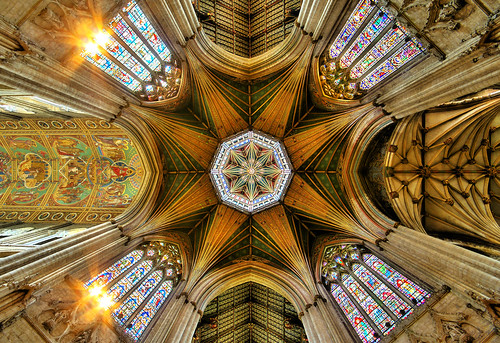
Basilica of the Assumption, Baltimore
John G. Waite Associates, Architects PLLC

image

Basilica of the Assumption

Restoration of the Basilica of the Assumption (also known as the Baltimore Cathedral), a major architectural landmark and masterpiece of the Federal style, removes a century and a half of obscuring alterations to bring back Benjamin Henry Latrobe's concept of luminosity and spatial configuration. The now fully functioning cathedral again serves the people of Baltimore while reclaiming one of America's most brilliant architectural designs, by its first professional architect; one that greatly influenced the development of the country's architecture.

Cathedral of Christ the Light, Oakland, California
Skidmore, Owings & Merrill LLP

image

Cathedral of Christ the Light, Photo: SOM, Cesar Rubio

The Cathedral of Christ the Light resonates as a place of worship and conveys an inclusive statement of welcome and openness as the community's symbolic soul. The glass, wood, and concrete structure ennobles and inspires through the use of light, material, and form.

Charles Hostler Student Center, Beirut, Lebanon
VJAA

The Hostler Center integrates social gathering spaces for students and faculty with sports facilities, a theater, and underground parking. Challenging the idea of a single large-scale building and similarly scaled open plaza, the project instead proposes multiple building volumes interconnected into a continuous field of habitable space by its gardens and green roofs.

The Gary Comer Youth Center, Chicago
John Ronan Architects

This 74,000-square-foot youth center, located in one of Chicago's poorest neighborhoods, demonstrates a commitment to social progress in providing a constructive environment for area youths to spend their after-school hours. The center provides support for the programs of a 300-member drill team/performance group for children of ages 8 to 18 and provides space for various youth educational and recreational programs for disadvantaged children to better their chances of success in life.

Horno³: Museo del Acero, Monterey, Mexico
Grimshaw Architects

Horno3: Museo Del Acero comprises a full restoration of a once-derelict 1960s blast furnace. The abandoned furnace structure and cast hall are the centerpiece of the museum, housing an interactive exhibit that brings the old furnace to life, allowing visitors the unique experience of touring inside this piece of industrial history.

The Lavin-Bernick Center for University Life, New Orleans
VJAA

image

The Lavin-Bernick Center for University Life, Photo: Paul Crosby

The challenge was to transform a rigidly compartmentalized and environmentally inefficient building into a dynamic, sustainable new university center. Only the existing concrete structure was retained, saving roughly $8 million in construction cost. The project was successfully completed for $189/SF, 14 months after Hurricane Katrina. Many of the sustainable design strategies used (canopies, shutters, balconies, and fans) were adapted from climate-responsive architecture traditional to New Orleans.

The New York Times Building, New York City
Renzo Piano Building Workshop and FXFowle Architects

image

The New York Times Building, Photo: Carmen

The New York Times Building incorporates many transcendental themes in good architecture—volume, views, light, respect for context, relationship to the street—with a design that is open and inviting, providing its occupants with a sense of the city around them.

Plaza Apartments, San Francisco
Leddy Maytum Stacy Architects

Located on a prominent corner in an improving San Francisco redevelopment area, this new, mixed-use project provides permanent housing for the chronically homeless as a pilot project of Mayor Gavin Newsom and the Dept. of Public Health's "Housing First" program, which is a cornerstone of the city's 10-year plan to end homelessness. The sustainably designed 9-story building provides 106 highly efficient studio apartments with on-site mental and physical health services for the residents.

Salt Point House, Salt Point, New York
Thomas Phifer and Partners

Constructed of elegantly efficient and economical materials, this 2,200-square-foot house in New York's Hudson Valley is sited on a meadow with views to a small private lake. The house is carefully sited to take advantage of the prevailing summer breezes. Strategically placed operable windows and ventilating skylights allow the breeze to flow through the home.

2009 Institute Honor Awards for Interior Architecture:

The 2009 Institute Honor Awards for Interior Architecture recognize 10 projects. The jury was drawn to projects that skillfully used natural light and provided unique architectural approaches to common design problems. Jury members include: Jury Chair Mark P. Sexton, FAIA, Krueck & Sexton Architects; Joan Blumenfeld, FAIA, Perkins + Will; Elisabeth Knibbe, AIA, Quinn Evans Architects; Arvind Manocha, Los Angeles Philharmonic Association; and Kevin Sneed, AIA, OTJ Architects,

Barclays Global Investors Headquarters, San Francisco
STUDIOS Architecture

image

Barclays Global Investors Headquarters, Photo: STUDIOS Architecture

Barclays Global Investors' new headquarters office embraces innovation within a professional environment through thoughtful, sophisticated design and provides the infrastructure necessary to meet the firm's significant technological demands. The design encourages collaboration and interaction, interspersing break areas within work areas, and offers a variety of meeting spaces.

Chronicle Books , San Francisco
Mark Cavagnero Associates

Chronicle Books, a popular San Francisco-based publishing company, needed a new home. Chronicle Books' new home now reflects their strong communal values, fosters innovation, and responds to their unique relationship to books. In support of the office's workflow, new circulation between floors provides intuitive access and visual connections. The varied spaces create an open, charged social atmosphere while preserving personal space for quiet and concentration.

The Heckscher Foundation for Children, New York City
Christoff:Finio architecture

Commissioned by the Heckscher Foundation for Children, this project transforms a stoic neo-Georgian townhouse built in 1902 in New York City into a modern interior for the foundation's administration, providing offices, a boardroom, and small conference spaces. By incising a shaft of daylight from the ground floor to rooftop, the organization of the building's activity is centered on a single gesture of light and space.

Jigsaw, Washington, D.C.
David Jameson Architect

image

Jigsaw, Photo: Nic Lehoux

Recycling a single-story suburban house located on a busy corner site, Jigsaw introverts itself in a continuous spatial flow around an open air courtyard carved from the home's remains. A matrix of spaces is linked by movement through them as stories merge and spaces relate to each other as they rise and fall in a series of interlocked puzzle-like volumes.

R.C. Hedreen, Seattle
NBBJ

R.C. Hedreen Company's new office goes beyond practice to a transformative experience that creates a new kind of environment for conducting business. The project called for a complete remodel of the second floor in Seattle's 1927 Art-Deco Olympic Tower building and transitioned the company from a small, traditional office space to a large, open environment offering functionality and sophistication.

School of American Ballet, New York City
Diller Scofidio + Renfro

image

School of American Ballet, Photo: Diller Scofidio + Renfro

The expansion project for the School of American Ballet is located in the facilities of the official training academy for the New York City Ballet. The 8,200-square-foot project includes the addition of two new dance studios within the space of two existing ones. Like nesting dolls, each of the new studios is housed in the volume of the existing.

Sheila C. Johnson Design Center, New York City
Lyn Rice Architects

The Sheila C. Johnson Design Center establishes a new 32,800sf campus nexus for Parsons The New School for Design by uniting and comprehensively re-organizing the street-level spaces of the school's four discrete buildings around a new campus quad. The center performs as an expansive urban threshold that draws together the school's creative programs and its vibrant Greenwich Village context.

Tishman Speyer Corporate Headquarters, New York City
Lehman Smith McLeish

The Corporate Headquarters for Tishman Speyer Properties is located in the historic Rockefeller Center. The project relocated Tishman's corporate office and consolidated business units in this flagship space, which is one of the firm's signature properties. Modifications to the 1931 building created dramatic spaces that highlight the firm's forward-thinking mission, mirrored most prominently by their Modern art collection.

Town House, Washington, D.C.
Robert M. Gurney, FAIA

Built like its neighbors, over a century ago and part of a continuous network of buildings in a historical district, this town house has been completely renovated. Floor openings with bridges, skylights, and a three story galvanized steel wall animate the spaces and integrate the floors vertically. Exposed brick walls, painted white are juxtaposed to blue epoxy floors. Glass and steel elements compose the spaces and unify a diverse but consistent palette of materials, resulting in a Modern spatial quality within a traditional town house typology.

World Headquarters for IFAW—Yarmouth Port, Massachusetts
designLAB architects

The World Headquarters for the International Fund for Animal Welfare (IFAW) established a precedent for a new work environment that is also a model for sustainable, low-impact development for the surrounding region. The desired building was to be transparent and open to reflect their honesty and communication. It was to be contemporary to reflect their global advocacy, yet inspired by the local vernacular. The result is a remarkable synergy of inhabitation that is reflected in the project at all scales.

2009 Institute Honor Award for Regional and Urban Design:

Six projects were selected to receive the 2009 Institute Honor Award for Regional and Urban Design. The projects range from singular buildings with an impact on the urban context, to zoning codes and master plan projects, to designs for entirely new cities. The 2009 Institute Honor Awards for Regional and Urban Design Jury included: Jury Chair Jonathan J. Marvel, AIA, Rogers Marvel Architects PLLC; Samuel Assefa, Assoc. AIA, City of Chicago, Department of Planning and Development; Tim Love, AIA, Utile Inc. / Architecture + Planning; Ivenue Love-Stanley, FAIA, Stanley Love-Stanley PC; and Stephanie Reich, AIA, City of Glendale, Planning Division.

Foshan Donghuali Master Plan, Guangdong, China
Skidmore, Owings & Merrill LLP

image

Foshan Donghuali Master Plan, Image: SOM, Christopher Grubbs

With unremitting high-rise development threatening Foshan's Old Town, city officials sought ways to conserve the ancient area while simultaneously creating a sustainable, modern central district able to meet the inevitable need for growth of a burgeoning city of 3.5 million. The plan is built at a density able to support a new, transit-oriented, mixed-use downtown while at the same time defraying the costs of preserving and restoring the vibrancy of the city's historic Old Town and Temple. The Foshan Plan aims at providing a new model for historic conservation and revitalization that can apply throughout China.

Orange County Great Park, Irvine, California
TEN Arquitectos

image

Orange County Great Park, Image: TEN Arquitectos

Orange County California's Great Park will bring over 1,400 acres of urban parkland to the city of Irvine and the surrounding region. Planned on the former site of El Toro Air Force base, this large tract of undeveloped land will include a man-made canyon that runs through the park and will support a diverse range of active and passive programs. A great lawn, sports park, botanical gardens, and several arts and cultural facilities, including a large outdoor amphitheater will be programmed into the park.

Between Neighborhood Watershed & Home, Fayetteville, Arkansas
University of Arkansas Community Design Center

This 43-unit Habitat for Humanity residential project is a pilot LEED-Neighborhood Development (LEED-ND) to be built for $60/sq ft plus infrastructure costs. The objective is to design a demonstration project that combines affordability with best environmental practices as designated by the U.S. Green Building Council. Porchscapes is a Low Impact Development (LID) project funded under the U.S. Environmental Protection Agency's Section 319 Program for Nonpoint Source Pollution. LID is an ecological stormwater management approach that sustains a site's predevelopment hydrologic regime with treatment landscapes distributed throughout the project.

Southworks Lakeside Chicago Development, Chicago
Sasaki Associates, Inc. and Skidmore, Owings & Merrill, LLP

Located in Chicago's historic Southside neighborhood, the former South Works steel mill site is the largest vacant site for redevelopment in the city. At more than 600 acres and with 1.5 miles of Lake Michigan shoreline, the site offers a milestone opportunity to create an innovative and sustainable new community that will be compact, pedestrian-oriented, and closely tied to transit, which will connect people to the lakefront for the first time in over a century.

The Central Park of the New Radiant City, Guangming New Town, China
Lee + Mundwiler Architects

The Central Park of the New Radiant City covers 2.37 km2 in Shenzhen, China. The city was selected as Communist China's first foray into capitalism because of its proximity to Hong Kong. Shenzhen flourished during the 1980-90s rapid industrialization, which destroyed much of the natural environment and significantly increased pollution levels. Many migrant workers flocked to Shenzhen to work in the booming industries.

Treasure Island Master Plan, San Francisco
Skidmore, Owings & Merrill LLP

image

Treasure Island Master Plan, Image: SOM

Bold moves set the framework for the redevelopment of Treasure Island. A complex and thoroughly articulated urban design and architectural plan establishes relationships among buildings, public open space, transportation, views, and natural forces, creating a compact, transit-oriented community with a commitment to sustainability unparalleled in the San Francisco Bay Area.


View article...


Winners of Wallpaper* Design Awards 2009 Revealed


Via Wallpaper*:

The results are finally here: the best of the best and the very highly commended of the rest, as chosen by our esteemed panel of judges - Kanye West, Jean Nouvel, Ines de la Fressange, Marc Newson, Sir Ken Adam and Stefano Pilati. Browse the winners and runners-up below. And check out the current issue (W* 119) for the full portfolio of portraits of our judges as well as extended text on the winning entries.

For videos interviews with the judges and behind the scenes footage of our shoot however, you will have to wait till January 26th, when our film chanel, Wallpaper* Video, goes live.

Judges' awards: the winners

Best new domestic appliance: joint winners (to see the runners up, click on the winners below)

image

image

Furniture designer of the year (to see the runners up, click on the winner below)

image

Best new restaurant (to see the runners up, click on the winner below)

image

Best new or renovated hotel (to see the runners up, click on the winner below)

image

Best new private house (to see the runners up, click on the winner below)

image

Best new public building (to see the runners up, click on the winner below)

image

Best city (to see the runners up, click on the winner below)

image

Best men's fashion collection (to see the runners up, click on the winner below)

image

Best women's fashion collection (to see the runners up, click on the winner below)

image

Best new grooming product (to see the runners up, click on the winner below)

image

Most life-enhancing product (to see the runners up, click on the winner below)

image

Images and text via Wallpaper*.


View article...